
Save a Mortgage Payment. Stage a House.
Here’s the funny thing, y’all… I am terrible at sales. My conscience will not allow me to passionately and sincerely sell anything I don’t truly believe in. I can tell you, from years of experience, as someone who has bought and sold more houses than I’d like to admit… don’t count the pennies! If the house isn’t getting as many viewings as you’d hoped, you don’t want the worry, “Should we have staged?” spiraling through your mind. In the scheme of things, the cost of staging typically pays for itself with a higher, faster sale.

Why Home Staging Matters in the Austin Market
The bullet points you need to know:
83% of buyers’ agents say staging helps buyers visualize the home as their own. (National Association of Realtors)
Up to 10% higher offers reported by agents when homes are staged. (National Association of Realtors)
Nearly half of sellers’ agents say staging reduces time on market. (National Association of Realtors)
Doesn’t virtual staging accomplish the same thing, but cheaper? Read my thoughts and experiences on how this can backfire.)

Let’s Dive Deeper
Today, Austin home buyers have more options, they’re more selective, and most of their decisions start online. Home staging helps a home stand out in a sea of options. It allows the buyers to emotionally connect with the space. If a house stands out and stirs up feelings of “home”, the house can sell faster - saving the seller money, time, and stress.
Buyers Shop Online First
Today’s buyers typically see a home online before they ever step inside. Photos determine whether a listing gets saved, shared, or skipped entirely. According to the National Association of Realtors, 83% of buyers’ agents say staging makes it easier for buyers to visualize a house as their future home. Staging helps position a home as the one buyers don’t want to miss. In a market like Austin — where many buyers are relocating or viewing multiple homes in a single weekend — that initial connection to the home matters.
(Doesn’t virtual staging accomplish the same thing, but cheaper? Read my thoughts and experiences on how this can backfire.)
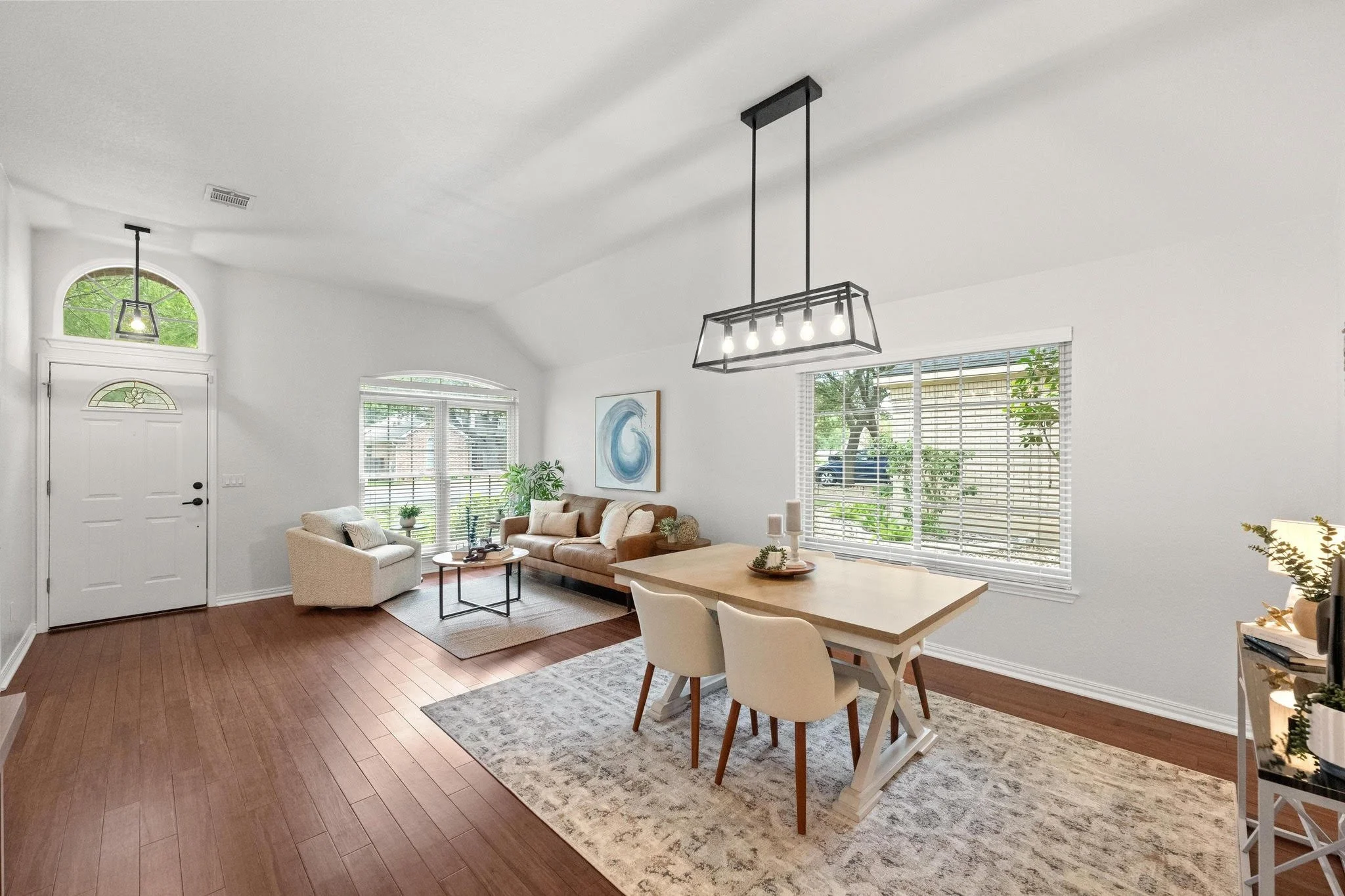
For a large family, this open area with diverse seating options is going to be a hit!
A staged home answers questions before buyers even ask them:
How big is this room?
How would furniture fit here?
Does this feel like my home?
Staging can be even more important in older/dated homes that need some updating. Learn more.
When buyers don’t have to work to imagine the possibilities, they’re more likely to take the next step.
Strong Presentation Supports Strong Offers
Austin buyers are especially value-conscious right now. When a home feels unfinished, cluttered, or poorly laid out, buyers mentally subtract from the price. When it feels polished and move-in ready, they’re more likely to make a competitive offer.
NAR research shows that 29–30% of agents report staging increases offers by up to 10%. Even a small percentage increase can mean tens of thousands of dollars depending on price point — often far exceeding the cost of staging.
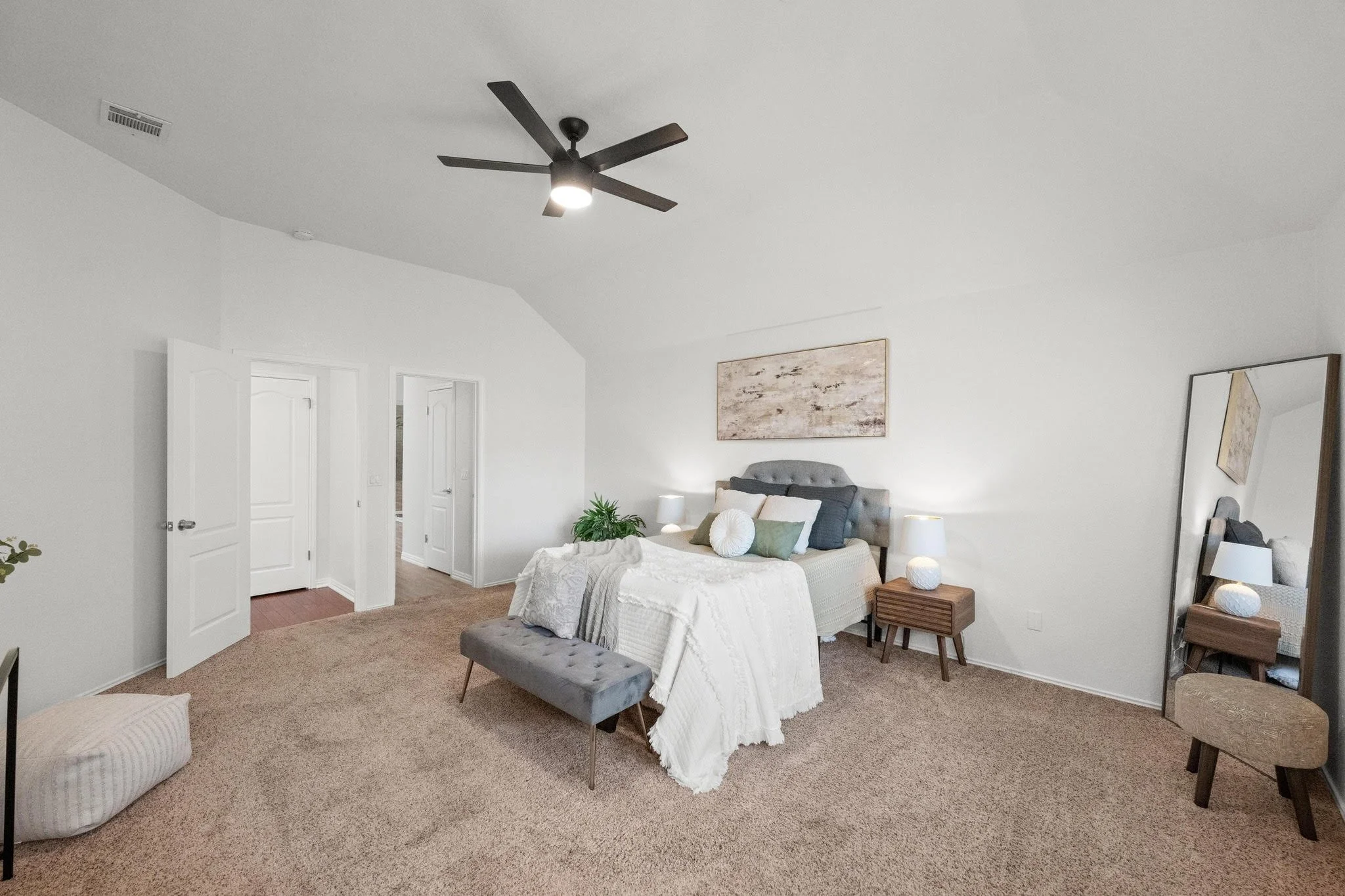
I can already see from this photo that there is a nice amount of floor space in this master bedroom.
Time on Market Matters in Austin
The longer a home sits, the more buyers wonder why.
Price reductions, extended days on market, and repeated showings without offers create momentum in the wrong direction. Nearly half of sellers’ agents report staging reduces time on market, helping listings maintain excitement and urgency when they first launch.
In practical terms, selling faster means:
Fewer mortgage payments
Lower utility and maintenance costs
Less disruption for families preparing to move
In many cases, staging pays for itself simply by shortening the timeline.
Staging Is Marketing — Not Decorating
Home staging isn’t about personal style. It’s about broad appeal.
In Austin, where homes range from modern new builds to Hill Country traditional, staging creates balance — highlighting architectural features while helping buyers visualize their modern lives within the space. The goal is to help the right buyer say yes quickly.
Industry data shows staging typically costs around 1% of a home’s sale price, yet staged homes frequently sell at a premium compared to similar properties that are not staged.
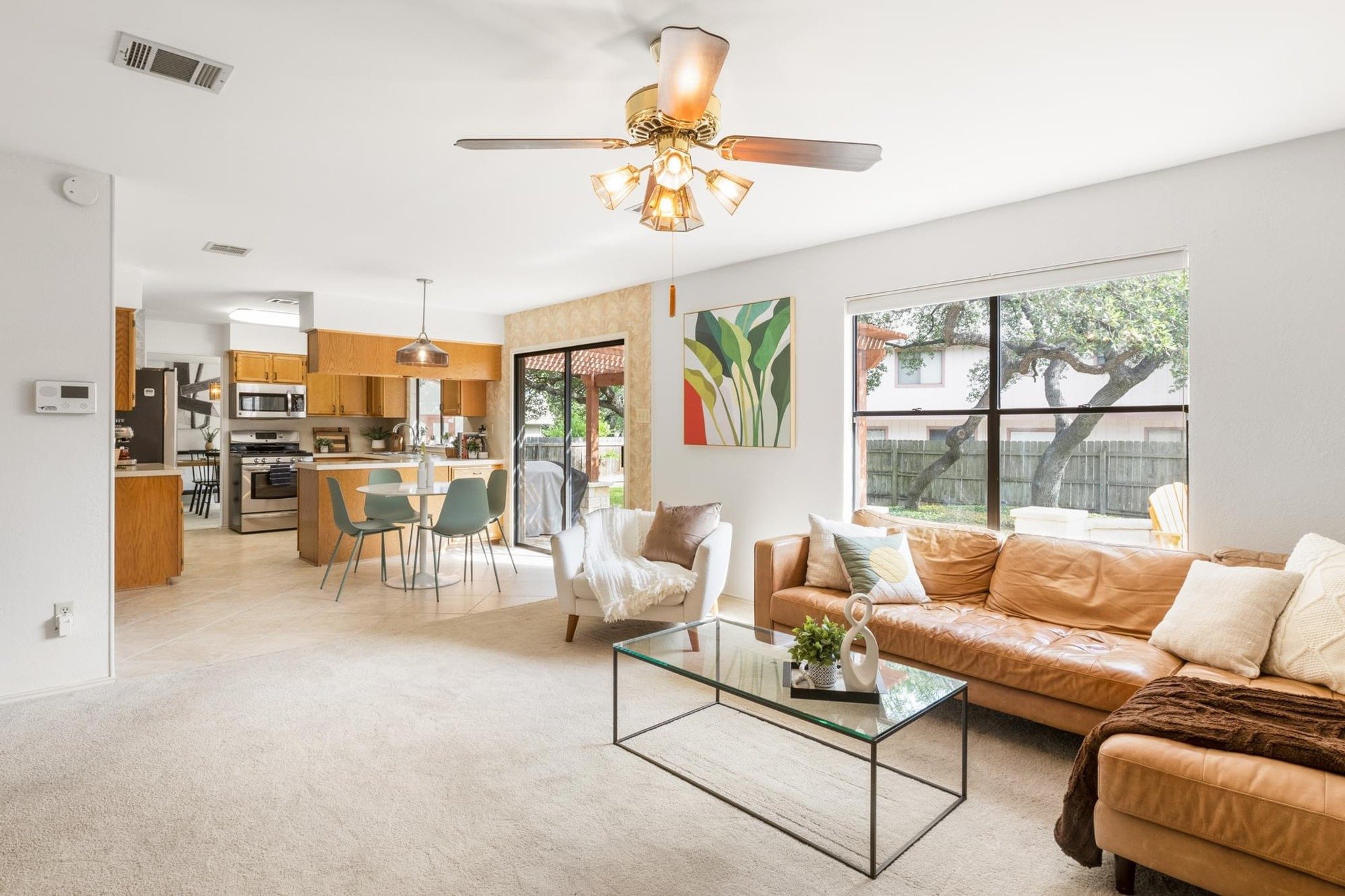
A Partial Stage
The Rooms That Matter Most
Research consistently shows the highest return from staging:
Living rooms
Primary bedrooms
Kitchens
These are the spaces where buyers imagine daily life. When these rooms feel cozy, functional, and intentional, the home feels more valuable.
The Bottom Line
When buyers can visualize themselves living in a home, they act faster. When homes sell faster, sellers save money.
My personal and professional advice: Save a mortgage payment. Stage a house.
Sources
National Association of Realtors (NAR), Profile of Home Staging
National Association of Realtors, Home Staging Boosts Sale Prices and Reduces Time on Market
Real Estate Staging Association (RESA), Industry Statistics
Realtor.com, Home Staging Research & Buyer Behavior Reports
Investopedia, Home Staging Survey Data
Industry research summaries on staging ROI and time-on-market trends